

 In October and November 2025, the Mobility Lab at the University of Salzburg partnered with SALIS Salzburg International School to explore how young people experience everyday mobility. Through interactive workshops with 13–14-year-old students, we asked a simple question: What do teens notice, value, and aspire to in their streets?
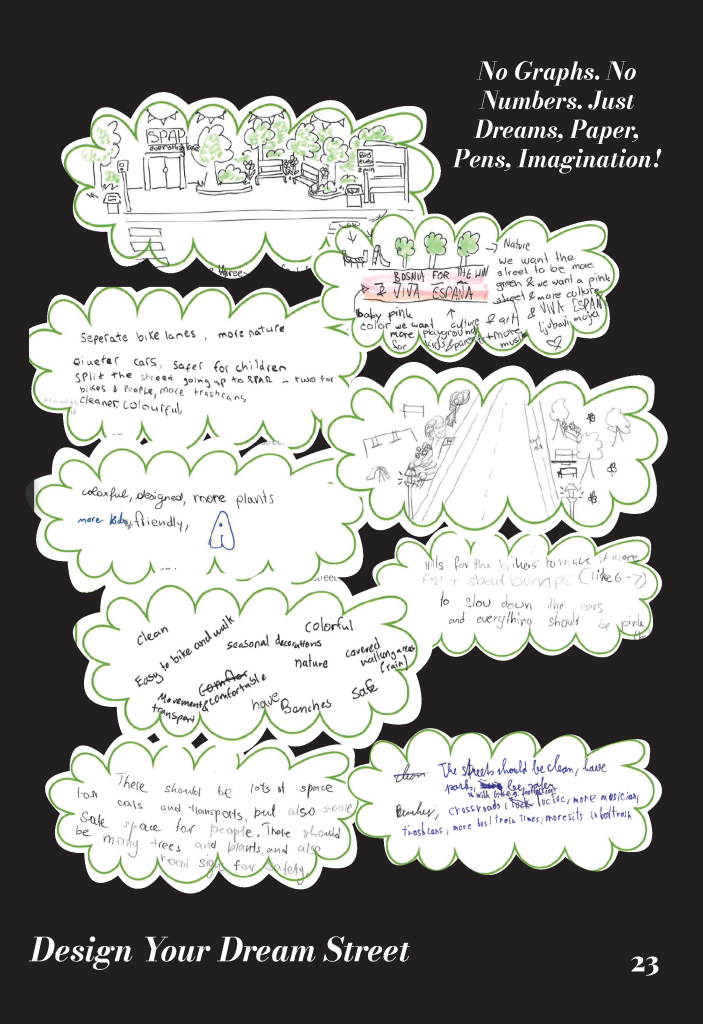
The sessions combined creative and reflective activities, analyzing street transformation images, exchanging letters about daily routes, evaluating the school street, and sketching dream streets. These methods revealed insights that will inform NetAScore for Kids, a youth-focused walkability and bikeability assessment tool, based on our Open Source project NetAScore. NetAScore for Kids is Amna’s master thesis research project that she is working on during her Copernicus Digital Earth (CDE) master’s study at the University of Salzburg. The workshops also served as a pilot for the upcoming i-MOBYL project.
What did we learn? Teens care about safety, but what truly shapes their experience is the street’s vibe. Grey, car-dominated environments feel boring. Vibrant streets with color, greenery, and playful elements feel inviting. Nearly half described their school commute as monotonous, dominated by traffic noise. Interestingly, a local SPAR grocery store emerged as a highlight, a meaningful destination that adds purpose and social interaction to their route. This shows that walkability is not just about infrastructure but also about places that make streets feel alive.
In short, youth engagement confirms that technical fixes alone will not create teen-friendly streets. Design choices that bring energy, color, nature, and spaces to pause matter most.
Looking ahead, i-MOBYL will scale this approach across five European countries starting February 2026, co-creating mobility solutions with young people and integrating findings into practical tools. Learn more about the transnational project funded under the DUT program here.
The full report of our workshops is available for download.
This is truly very inspiring! It’s undoubtedly that kids and teens are every time more involved in urban transformation After all, they’ll be the future instruments for increasing livability in cities.
[…] activities have already begun, including participatory workshops in a Salzburg school that explored students’ perceptions of safety, greenery, and active mobility. More collaborative work lies ahead as we move from ideas […]