

The Velo-city Conference is the world’s leading event for cycling research, practice, and advocacy. The 2026 edition in sunny Rimini focused on how data, design, and governance can accelerate the transition towards active mobility and livable cities. Martin Loidl, head of the Mobility Lab, contributed to a varied program, representing two on-going research projects.
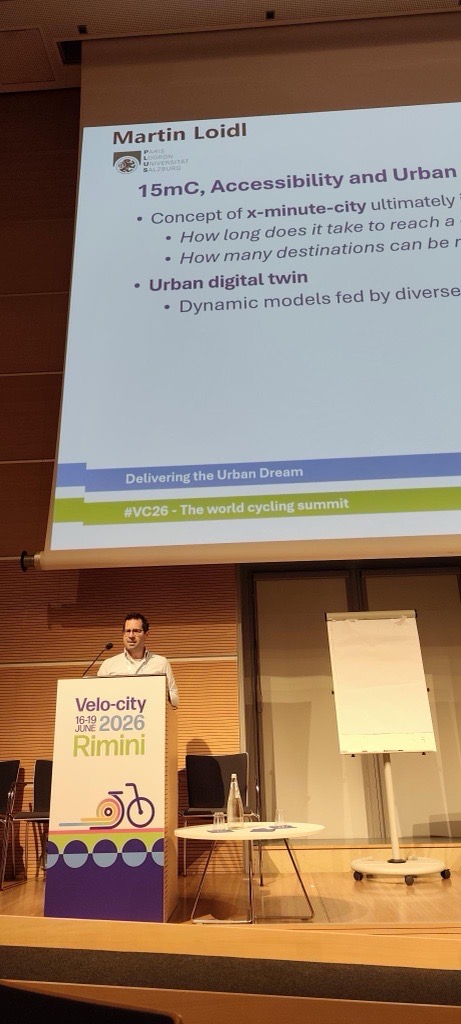
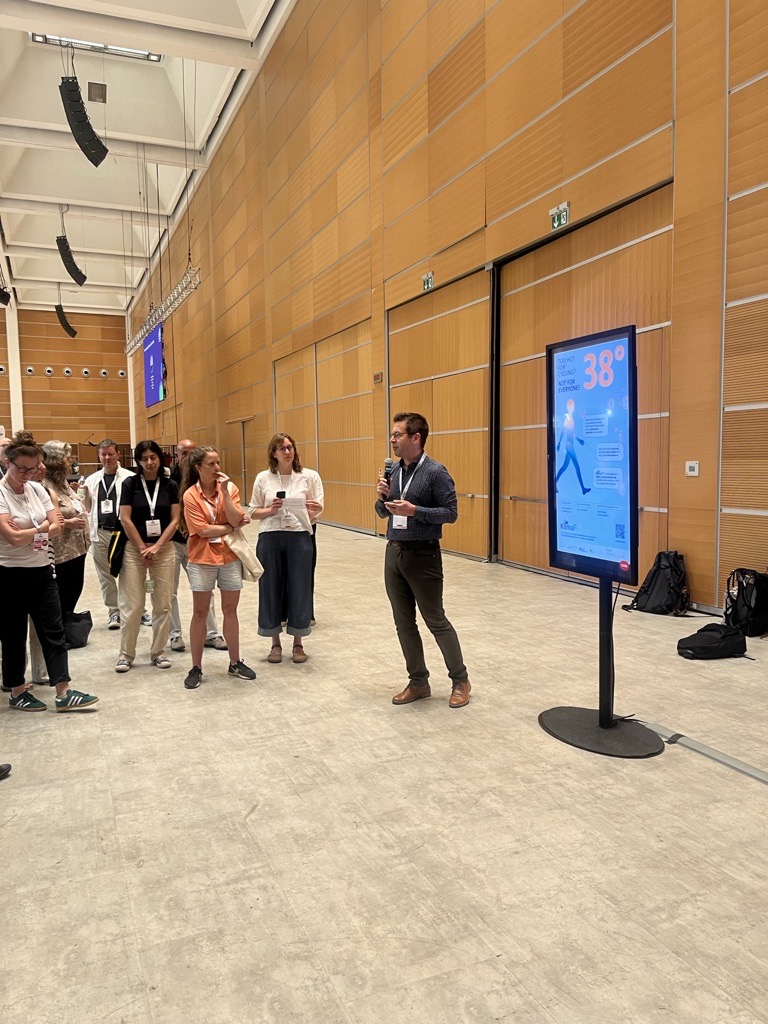 In the poster session, Martin presented the KlimaFIT project, highlighting the benefit of interdisciplinary research at the crossroad of digitalization and heat adaptation. The situation-aware data hub sparked particular interest among the audience. In a workshop, dedicated to the CITWIN project, Martin delivered a lightning talk on geospatial accessibility analysis, highlighting the potential of digital tools for understanding and improving urban mobility.
 Discussions at the conference highlighted that cycling is increasingly recognised as core infrastructure rather than an alternative mode. An increasing number of analyses show a strong relationship between the availability of cycling infrastructure and its actual use, underlining the importance of strategic investment. Longitudinal data collection turns out to be a key ingredient to support such investments. But even more, longitudinal data are indispensable for compelling communication that justifies cycling promotion and shapes narratives. In several sessions, speakers emphasised how media framing and language influence the acceptance of mobility measures and urban transformations.
Overall, Velo-city 2026 demonstrated that successful cycling promotion requires a systemic approach, combining infrastructure, data, communication, and a shift in mindset towards cycling as a default mode of transport.
Leave A Comment